
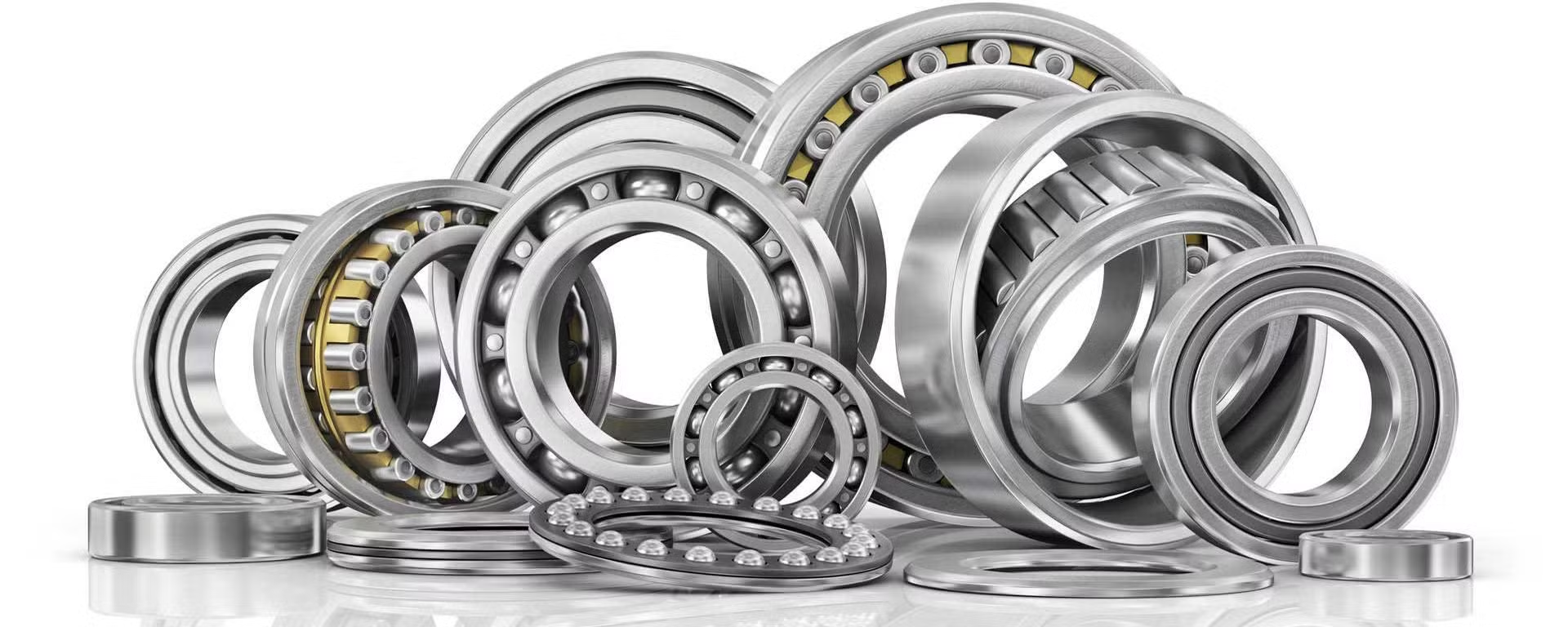
If you work with industrial machinery, you already know that small components can have a big impact on machine performance. Industrial bearings are one of those components.
A properly selected bearing helps machinery run smoothly, reduce friction, and carry loads efficiently. But choosing the wrong bearing can lead to frequent breakdowns, higher maintenance costs, and costly production downtime.
Understanding industrial bearings selection is essential. The right bearing can extend equipment life, improve efficiency, and reduce operational disruptions.
In this guide, we’ll walk through the basics in a simple way including what industrial bearings are, the common types used in machinery, and how to choose the right one for your equipment.
What Are Industrial Bearings?
Industrial bearings are mechanical components that allow machine parts to move smoothly while reducing friction between them.
In simple terms, bearings help rotating parts move easily while supporting loads. Without bearings, machinery would experience excessive friction, overheating, and rapid wear.
You’ll find bearings in many types of equipment such as:
- Electric motors
- Pumps
- Compressors
- Conveyor systems
- Gearboxes
- Heavy industrial machines
Because bearings support loads and guide movement, they play a critical role in keeping industrial equipment running efficiently and reliably.
What Are the Main Types of Industrial Bearings?
There are many industrial bearing types, but a few are commonly used in most machinery applications. Understanding the differences will help you choose the right one.
Deep Groove Ball Bearings
Deep groove ball bearings are the most widely used bearings in industrial machinery.
They are versatile and can handle both radial loads and moderate axial loads.
You’ll commonly find them in:
- Electric motors
- Pumps
- Fans
- Small gearboxes
These bearings are popular because they run smoothly, require minimal maintenance, and perform well at high speeds.
Angular Contact Bearings
Angular contact bearings are designed to handle combined loads, meaning both radial and axial forces.
They are often used in high-speed machinery and precision equipment.
Typical applications include:
- Machine tools
- High-speed motors
- Industrial automation systems
These bearings are designed with a specific contact angle that helps them manage loads efficiently.
Cylindrical Roller Bearings
Cylindrical roller bearings are built to support heavy radial loads.
Instead of balls, they use cylindrical rollers that provide greater contact with the raceway, which increases load capacity.
These bearings are commonly used in:
- Industrial gearboxes
- Electric motors
- Pumps
- Large machinery
They are a good choice when equipment needs to handle heavier loads than ball bearings can manage.
Tapered Roller Bearings
Tapered roller bearings are designed to handle both radial and axial loads simultaneously.
These bearings are commonly used in:
- Construction machinery
- Industrial vehicles
- Automotive hubs
- Heavy-duty equipment
Because of their tapered design, they distribute loads efficiently and perform well in applications with high stress or shock loads.
Spherical Roller Bearings
Spherical roller bearings are designed for heavy-duty applications and misalignment conditions.
In many industrial machines, shafts may not always stay perfectly aligned. These bearings can adjust automatically to slight misalignment, making them very reliable in harsh environments.
You’ll often find them in:
- Mining equipment
- Heavy conveyors
- Crushers
- Steel plants
They are commonly used in industrial bearings for heavy machinery where durability is critical.
How to Choose the Right Industrial Bearing (Step-by-Step)
If you are new to bearing selection, the process may seem complicated. But in reality, it comes down to evaluating a few key factors.
Here is a simple step-by-step approach.
1. Understand the Load Type
First, identify what type of load the bearing must support.
Loads can be:
- Radial loads – force applied perpendicular to the shaft
- Axial loads – force applied parallel to the shaft
- Combined loads – both radial and axial forces
Different bearings are designed to support different load conditions.
2. Consider the Operating Speed
Some machinery runs at very high speeds, while other equipment moves slowly but carries heavy loads.
Bearings used in high-speed equipment must have:
- Low friction
- Proper lubrication
- Heat resistance
Deep groove ball bearings are commonly used in high-speed applications.
3. Evaluate Operating Temperature
Industrial equipment often operates in environments where temperatures can vary significantly.
High temperatures can affect:
- Bearing materials
- Lubrication performance
- Bearing lifespan
Choosing bearings designed for the expected temperature range helps prevent premature failure.
4. Check Lubrication Requirements
Lubrication is essential for bearing performance.
Bearings may require:
- Grease lubrication – common for general machinery
- Oil lubrication – used in high-speed or high-temperature equipment
Proper lubrication reduces friction and extends the life of the bearing.
5. Consider the Operating Environment
Industrial environments often contain factors that affect bearing life, such as:
- Dust
- Moisture
- Chemicals
- Contamination
In such conditions, sealed or protected bearings may be required to ensure durability.
6. Look at Precision Requirements
Some machinery requires very high precision, especially in applications such as:
- CNC machines
- Precision motors
- Automation equipment
In these cases, bearings must meet strict tolerance and alignment requirements.
How Bearing Selection Impacts Machinery Performance
Choosing the right bearing does more than just keep machinery running. It directly affects overall equipment performance and maintenance costs.
Here’s how.
Reduced Downtime
When the correct bearing is used, equipment operates more reliably. This reduces unexpected failures and production interruptions.
Improved Energy Efficiency
Bearings designed with low friction allow machines to run more efficiently, which helps reduce energy consumption in industrial operations.
Longer Equipment Life
Proper bearings help distribute loads evenly and reduce wear on machine components. This helps extend the lifespan of both the bearing and the equipment.
Lower Maintenance Costs
Using the right bearing from the beginning reduces the need for frequent repairs or replacements.
Why Many Industries Prefer SKF Bearings
When it comes to industrial bearings, SKF is one of the most recognized brands worldwide.
Many industries prefer SKF bearings for machinery because they offer:
- High engineering standards
- Reliable performance
- Long service life
- Precision manufacturing
SKF bearings are widely used across industries such as manufacturing, oil & gas, mining, and heavy industrial operations.
Because of their reliability, they are often the preferred choice for critical machinery applications.
Industries That Use Industrial Bearings
Industrial bearings are used in a wide range of industries because rotating machinery is common in almost every industrial environment.
Some examples include:
Manufacturing Plants
Bearings support motors, conveyor systems, and automated machinery used in production lines.
Oil & Gas Equipment
Drilling equipment, compressors, and pumps all rely on durable bearings to operate continuously.
Pumps and Compressors
These machines depend on bearings to support rotating shafts and maintain alignment.
Conveyor Systems
Conveyors used in manufacturing and logistics require bearings that can handle continuous operation and heavy loads.
Electric Motors
Most industrial motors use bearings to support rotating shafts and reduce friction.
Where to Buy Industrial Bearings in Saudi Arabia
For industrial buyers, choosing the right supplier is just as important as choosing the right bearing.
When evaluating bearing suppliers in Saudi Arabia, procurement teams should consider:
- Availability of trusted global brands
- Authentic industrial components
- Technical support and expertise
- Reliable supply chain and delivery
Working with reliable industrial suppliers ensures you receive genuine bearings that meet performance requirements.
Many suppliers also offer SKF bearings and other industrial power transmission components to support different machinery applications.
Conclusion
Industrial bearings may be small components, but they play a major role in machinery performance and reliability.
By understanding different industrial bearing types, load conditions, and operating environments, engineers and procurement professionals can select the right bearing for their equipment.
Choosing the correct bearing helps improve machine efficiency, reduce downtime, and lower long-term maintenance costs.
FAQs
How do I choose the right bearing size?
The correct bearing size depends on the shaft diameter, load requirements, and operating conditions. Engineers typically refer to bearing catalogs or manufacturer specifications to identify the appropriate size for a particular machine.
What is the most common bearing used in industrial machinery?
Deep groove ball bearings are the most commonly used industrial bearings because they are versatile, reliable, and suitable for a wide range of machinery applications.
What is the difference between ball bearings and roller bearings?
Ball bearings use spherical balls to reduce friction and are suitable for high-speed applications. Roller bearings use cylindrical rollers, which provide higher load capacity for heavy-duty machinery.
How often should industrial bearings be replaced?
The lifespan of industrial bearings depends on load conditions, lubrication, and operating environment. With proper maintenance, many bearings can last several years before replacement is required.
Which bearings are best for heavy machinery?
Spherical roller bearings and cylindrical roller bearings are commonly used in heavy machinery because they can support large loads and perform reliably under demanding conditions.