
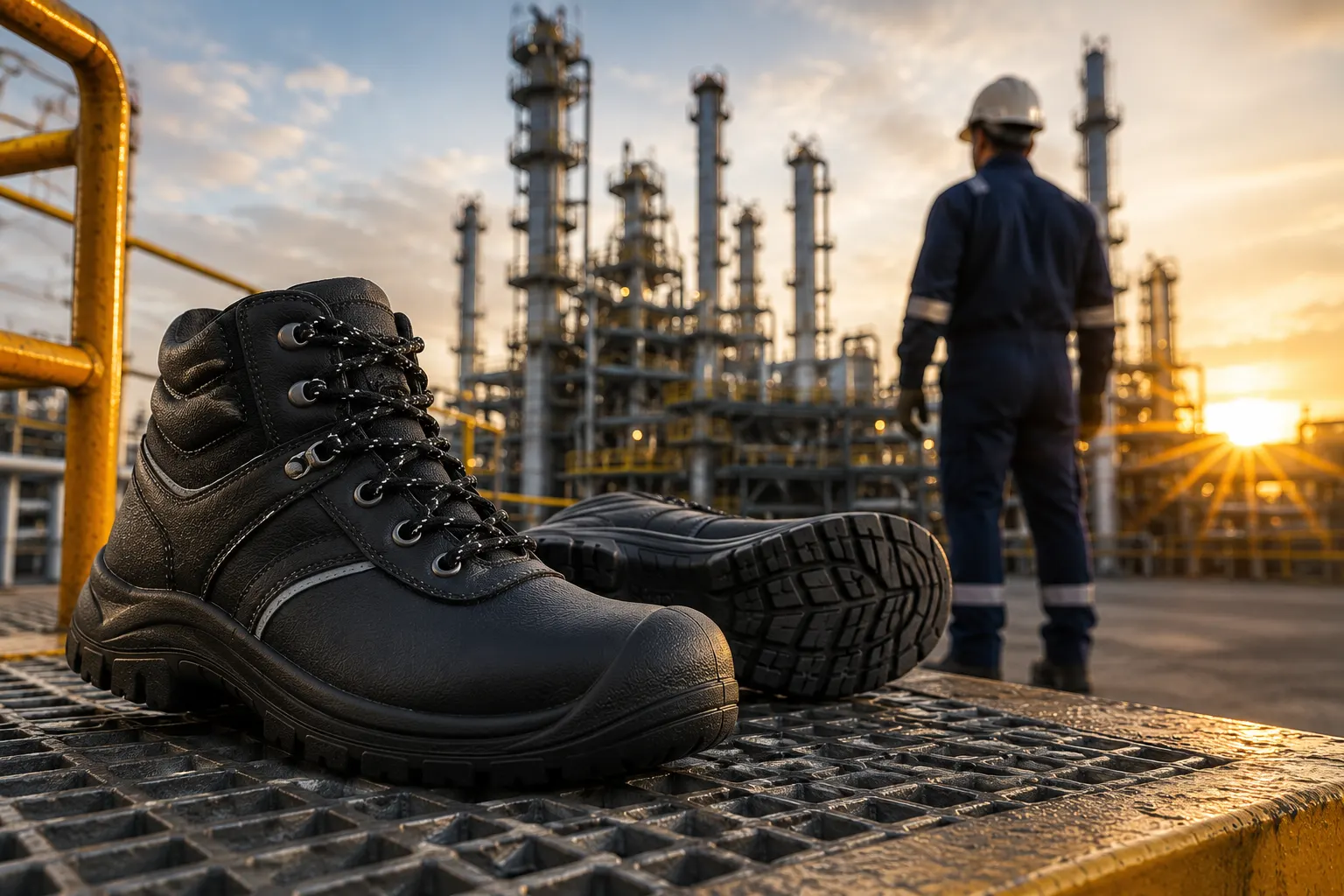
Safety shoes are a standard requirement across construction, oil & gas, manufacturing, petrochemical, logistics, and industrial facilities in Saudi Arabia. The real challenge begins when it is time to determine the correct safety shoes standard, select the appropriate protection rating, and provide proof of compliance during HSE inspections or site audits.
Choosing the wrong specification can lead to non-compliance findings, site access restrictions, failed audits, procurement delays, and increased safety risks. Understanding Safety Shoes Standard for Saudi Arabia is therefore essential – not only for worker protection but also for meeting project requirements, regulatory expectations, and operator-specific HSE standards.
From construction sites in Riyadh and Dammam to refineries in Jubail and Yanbu, selecting certified industrial safety footwear ensures compliance with workplace safety regulations while protecting workers from impact, puncture, slip, and electrical hazards.
Why Safety Shoes Standard Matter in Saudi Arabia
Industrial environments in Saudi Arabia present a variety of workplace hazards that can result in serious injuries if the wrong footwear is selected. Workers in construction sites may encounter protruding nails, sharp metal debris, and heavy materials that can cause puncture or impact injuries. In oil and gas facilities, slippery surfaces, hydrocarbon contamination, and static electricity introduce additional risks. Manufacturing plants and warehouses often require protection against falling objects, repetitive impact, and long hours of standing. Selecting footwear that meets the appropriate safety standard helps organisations reduce workplace incidents while maintaining HSE compliance.
What is EN ISO 20345?
EN ISO 20345 is the international standard governing safety footwear. It establishes testing procedures, performance requirements, and classification systems for protective footwear used in industrial workplaces.
A certified safety shoe must provide:
- 200 Joule toe impact protection
- 15 kN compression resistance
- Verified laboratory testing
- Permanent certification markings
- Compliance documentation
In Saudi Arabia, EN ISO 20345 is widely recognised by SASO and referenced by major industrial operators, engineering contractors, and HSE departments.
Understanding Safety Shoe Standards for Saudi Arabia
The EN ISO 20345 classification system follows a progressive structure. Each rating builds upon the protection provided by the previous level.
SB – Safety Basic
The entry-level classification.
Provides:
✔ 200J toe protection
Does not include:
✘ Antistatic protection
✘ Heel energy absorption
✘ Penetration resistance
✘ Water resistance
Best suited for low-risk indoor environments.
S1 – Basic Industrial Protection
S1 includes everything in SB plus:
✔ Antistatic properties
✔ Energy absorption in the heel
✔ Closed heel design
Suitable for:
- Warehouses
- Distribution centres
- Indoor manufacturing facilities
S1P – Construction Site Standard
S1P includes all S1 features plus:
✔ Midsole penetration resistance
Protection against:
- Nails
- Rebar offcuts
- Metal scrap
- Sharp construction debris
Recommended for:
- Construction projects
- Maintenance activities
- Industrial shutdowns
- Mechanical workshops
S2 – Water Resistant Protection
S2 includes all S1 features plus:
✔ Water-resistant upper material
Ideal for:
- Outdoor construction
- Utility maintenance
- Water treatment facilities
- Wet industrial environments
S3 – Maximum Industrial Protection
S3 combines:
✔ Toe protection
✔ Antistatic properties
✔ Heel energy absorption
✔ Penetration-resistant midsole
✔ Water-resistant upper
✔ Cleated outsole for improved traction
S3 is widely considered the preferred specification for heavy industrial environments in Saudi Arabia. For demanding applications in oil & gas, petrochemical plants, and construction projects, products such as the Cofra safety boots offer advanced protection against impact, penetration, slips, and challenging site conditions.
Safety Boots Oil and Gas: Which Rating is Required?
When selecting safety boots oil and gas operations require, S3 is generally the preferred specification.
Oil and gas facilities present multiple simultaneous hazards:
- Hydrocarbon contamination
- Metal debris
- Uneven surfaces
- Slippery process areas
- Static electricity risks
- Outdoor exposure
Because of these conditions, most refinery, petrochemical, and upstream facilities require safety footwear that combines:
- Impact protection
- Slip resistance
- Water resistance
- Anti-static properties
- Penetration resistance
For many shutdown projects, turnarounds, and maintenance operations, S3-rated safety boots oil and gas facilities use are considered the minimum acceptable standard.
Additional features often required include:
HRO – Heat Resistant Outsole
Suitable for:
- Refineries
- Petrochemical plants
- Steel fabrication facilities
- High-temperature process areas
SRC – Slip Resistance
Critical for:
- Oily surfaces
- Chemical processing plants
- Maintenance workshops
- Process facilities
ESD – Electrostatic Discharge
Recommended for:
- Electrical maintenance
- Electronics manufacturing
- Sensitive instrumentation environments
Safety Shoe Rating Comparison Table
| Rating | Toe Protection | Antistatic | Penetration Resistance | Water Resistance | Typical Application |
| SB | Yes | No | No | No | Low-risk indoor work |
| S1 | Yes | Yes | No | No | Warehousing |
| S1P | Yes | Yes | Yes | No | Construction |
| S2 | Yes | Yes | Yes | Yes | Outdoor work |
| S3 | Yes | Yes | Yes | Yes | Oil & Gas, Petrochemical, Heavy Industry |
How to Verify Certified Safety Footwear
Before purchasing industrial safety footwear, verify:
Certification Label
Check for:
- EN ISO 20345 marking
- CE mark
- Protection rating
- Manufacturer details
Declaration of Conformity
Request:
- Certification documents
- Product datasheets
- Test reports
Toe Cap Type
Options include:
- Steel toe safety shoes
- Composite toe safety boots
Composite toe footwear is increasingly preferred in industrial environments due to its lightweight construction and non-metallic design.
Choosing the Right Safety Shoe for Your Site
| Industry | Recommended Rating |
| Warehousing | S1 |
| Manufacturing | S1 or S1P |
| Construction | S1P or S3 |
| Oil & Gas | S3 |
| Petrochemical | S3 + HRO |
| Electrical Maintenance | S1P/S3 + ESD |
| Outdoor Industrial Sites | S3 |
Source Certified Safety Shoes in Saudi Arabia
Selecting the correct safety footwear is about more than PPE compliance. It is about protecting workers, meeting project specifications, and ensuring uninterrupted operations.
Astro Global Solutions supplies certified industrial safety footwear across Saudi Arabia, including Riyadh, Dammam, Jubail, Yanbu, Jeddah, and Al Khobar. Our range includes EN ISO 20345 certified footwear from leading manufacturers such as Cofra, designed for construction, manufacturing, petrochemical, and safety boots oil and gas applications.
Frequently Asked Questions
What are the Safety Shoe Standards for Saudi Arabia?
The primary standard is EN ISO 20345, which defines performance requirements for industrial safety footwear used across construction, manufacturing, petrochemical, and oil & gas sectors.
Which safety shoes are best for oil and gas facilities?
S3-rated safety footwear is typically recommended for oil and gas environments because it combines toe protection, anti-static properties, penetration resistance, water resistance, and enhanced grip.
Are composite toe safety boots compliant with EN ISO 20345?
Yes. Both steel toe and composite toe footwear can meet EN ISO 20345 requirements when properly certified.
What is the difference between S1P and S3?
S3 includes all S1P protections plus water resistance and an enhanced cleated outsole, making it more suitable for outdoor industrial and oil & gas environments.
Can uncertified footwear fail a site audit?
Yes. Most industrial sites require visible EN ISO 20345 certification markings and may request supporting compliance documentation during audits.